Together we are creating strategies for a care-based green transition!


Nurturing Infrastructures of Care


Within the Project INFRACARE we are transforming Neighbourhoods through social, cultural & artbased participation. We are creating strategies for a care-based green  transition.

Together we question: How can infrastructures of care sustain neighbourhood resilience, inclusion, and participation in the green transition?


Care infrastructures are co-developed between:
Diverse communities, artists, researchers, architects, practitioners, citizens and policymakers. INFRA-CARE innovations support cities and municipalities in accelerating their digital transformation through a Digital Neighborhood Atlas that widens care infrastructures knowledge and supports other (inter)national regions,  communities and stakeholders in their local strategies for mobilising societal engagement to co-create care  infrastructures as part of new living futures.

Aim

INFRA-CARE strengthens the social fabric of European neighbourhoods through
cultural participation and carebased governance for the green transition: 

    1. It explores how everyday cultural and caring practices foster trust, belonging, and civic engagement, particularly among marginalised groups; 

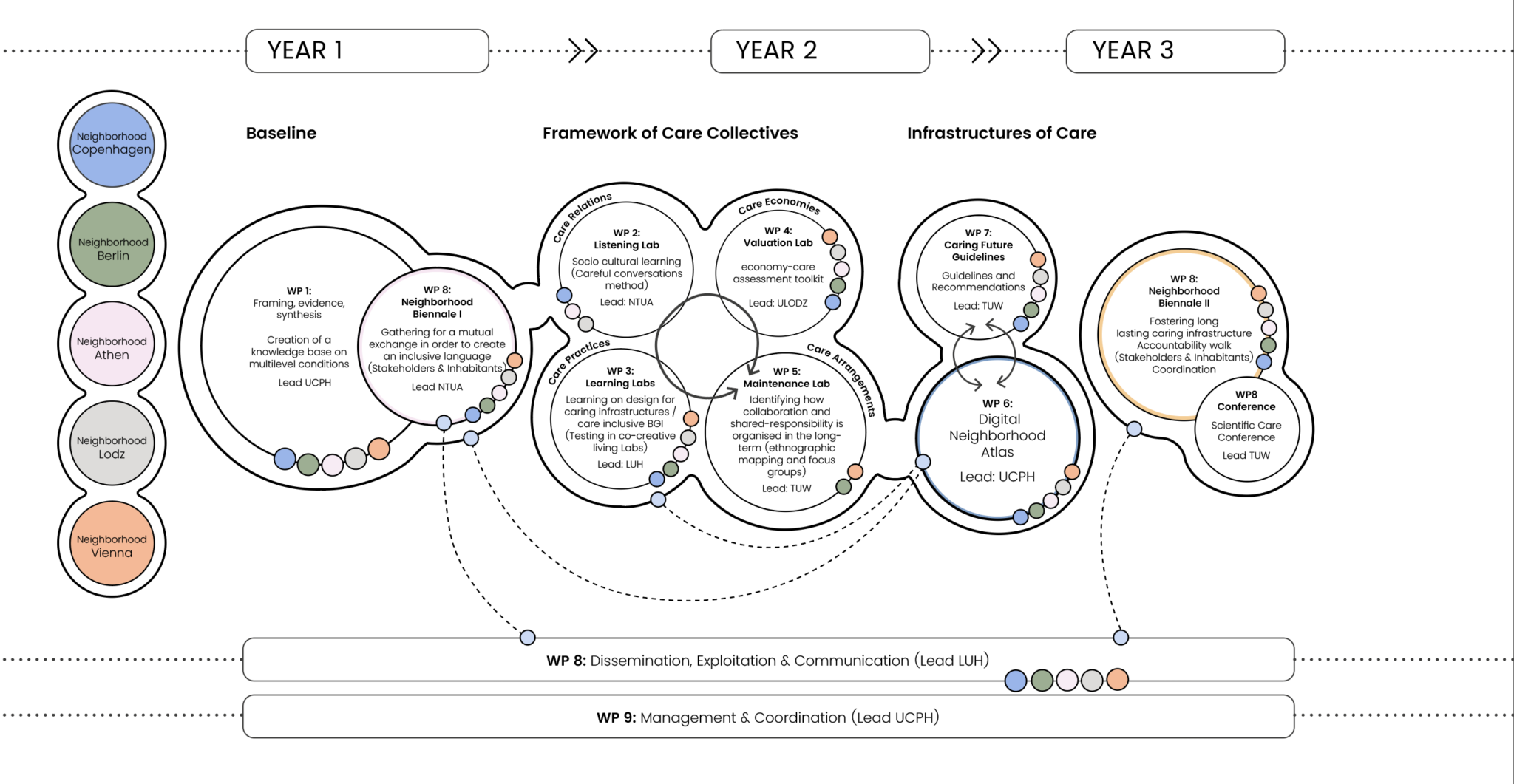
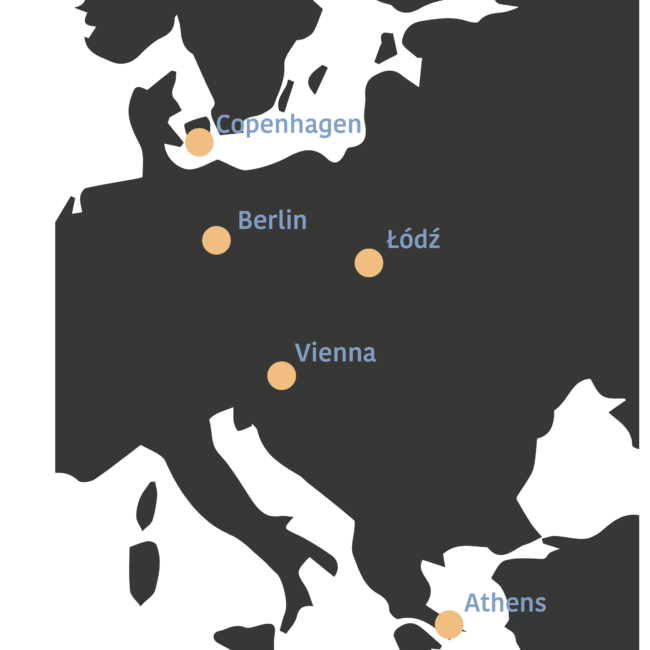
    2. Across five European cities, Living Labs and Biennales co-create and test evidence-based strategies to embed care, creativity, and inclusion into neighbourhood transformation.

    3. A Digital Neighbourhood Atlas visualises social, ecological, cultural, institutional, and digital infrastructures of care, while the Caring Neighbourhood Index measures their impact on cohesion and green discontent.

    4. The Caring Futures Guidelines translate insights into scalable, policy-relevant tools for inclusive,sustainable, and beautiful green transitions.

Why this matters?

 Europe stands at a crossroads.

The green transition is unfolding in an era of polycrisis, reshaping how we live, work, and interact. Cities and neighbourhoods are at the frontline-facing heatwaves, flooding, housing shortages, and rising costs that deepen inequality, isolation, and distrust. Across the continent, green discontent is growing. Citizens encounter climate policies that move too slowly to confront the urgency of ecological collapse or feel disconnected from everyday realities.

The transition is not only technical or economic, but deeply social and ethical, testing the trust and solidarity needed for collective transformation.

Addressing these crises requires strengthening the social fabric of neighbourhoods, understood as infrastructures of care: the everyday spaces and relationships that sustain belonging, culture, and participation.

Objectives

1. Create a Caring
Neighbourhood Index:
Mapping Baselines for
Transformation


2. Strengthen
Neighbourhood
Cohesion through
Care-Full Cultural
Participation


3. Monitor and Co-
Evaluate the Benefits
of Cultural Participation
for Social-Ecological
Cohesion


4. Deliver the Caring
Futures Guidelines
and Digital Neigh-
bourhood Atlas

How we work?

Care infrastructures are co-developed between diverse communities, artists, researchers, architects, practitioners, citizens and policymakers.
INFRA-CARE innovations support cities and municipalities in accelerating their digital transformation through the Digital Neighborhood Atlas that widens care infrastructures knowledge and supports other (inter)national regions, communities and stakeholders in their local strategies for mobilising societal engagement to co-create care infrastructures as part of new living futures.


CASESTUDYS